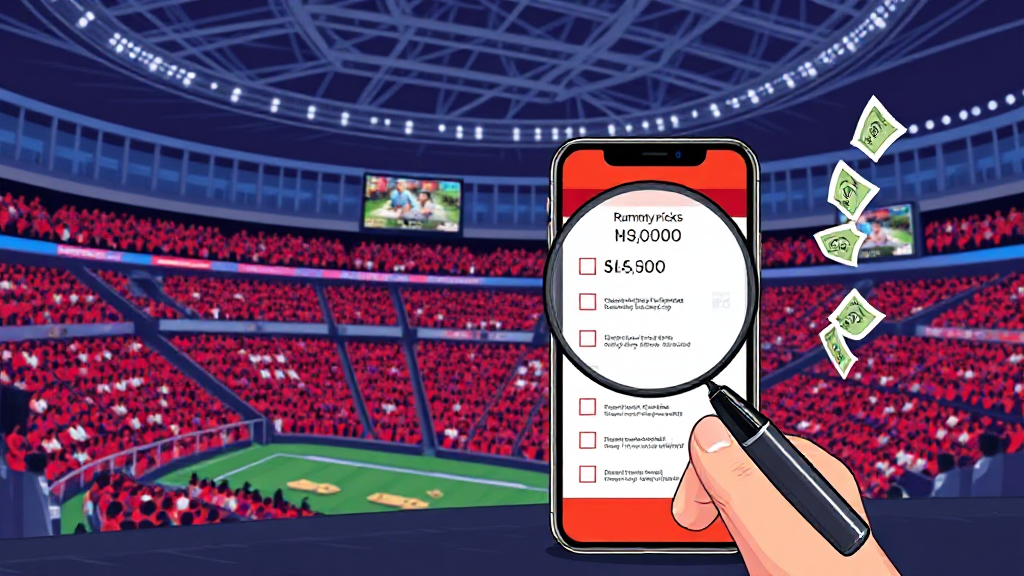
Rummy App Claims vs Reality: How Comparison Sites Filter Misinformation
It arrives in a family WhatsApp group at 11 p.m.: a screenshot of a rummy app lobby showing a welcome bonus so large it looks like a typo, a withdrawal confirmation that supposedly cleared in nine minutes, and a caption urging everyone to “join before the offer closes.” A cousin forwards it. A colleague reposts it. Within a day, three people you know have downloaded an app they know almost nothing about. The honest question is not whether the screenshot is exciting — it clearly is — but whether anything in it can be verified before someone acts on it. That is where an Online Rummy Game comparison hub earns its place, not as a hype machine but as a filter.
India’s rummy app market is crowded, loud and heavily marketed. Real-money skill gaming operates in a legally sensitive space, and state-level rules differ, which makes accurate information unusually valuable and unusually scarce. When exaggerated claims spread faster than corrections, players need a method for separating marketing from mechanics. This article examines the most common false claims circulating online, how verification actually works, what screenshot forensics can reveal, and how editorial comparison sites debunk misinformation at scale.
The Four Claims That Keep Circulating
Misinformation about rummy apps is rarely invented from nothing. It usually takes a real feature — a welcome bonus, a withdrawal window, a promotional tournament — and inflates it until it becomes misleading. Four patterns repeat again and again.
The unlimited or recurring sign-up bonus. A screenshot claims a new user can claim a joining bonus repeatedly, or that the bonus has no conditions attached. In practice, welcome bonuses are typically one-time, tied to a fresh account and a verified mobile number, and often structured as a percentage match up to a cap rather than a flat cash amount. The gap between “up to” and “you will receive” is where most disappointment lives.
The instant, unconditional withdrawal. Viral posts promise money out “in seconds, no questions asked.” Real withdrawal processes involve identity verification, a minimum balance threshold, and a processing window that varies by payment method. Some apps are genuinely fast; none are unconditional. A claim that removes every condition is a claim worth distrusting.
The guaranteed-win framing. Screenshots of winning streaks imply that skill alone guarantees profit. Rummy is a game of skill in the legal sense used by Indian courts, but skill reduces the role of chance — it does not eliminate variance. Any app or affiliate promising assured returns is describing something that does not exist.
The fake regulatory badge. Some promotional images display seals, certificates or “government approved” ribbons that no authority issued. Because real-money gaming regulation in India is fragmented and state-specific, a generic approval badge is usually decoration, not documentation.
Each of these claims has a common thread: it removes a condition. Bonuses have conditions. Withdrawals have conditions. Games have variance. Regulation has jurisdiction. When a screenshot erases all of that, the screenshot is doing marketing work, not reporting.
How Verification Actually Works
Verifying a rummy app claim is less about detective work and more about knowing which documents to read. Four sources settle most disputes.
Terms and conditions, specifically the bonus clause. Every legitimate operator publishes the rules attached to a promotional offer. Look for the wagering or playthrough requirement, the expiry period, the maximum cash-out value of bonus funds, and whether the bonus is credited as cash or as restricted credits. If a forwarded screenshot does not link to that clause, the claim is incomplete by default.
The withdrawal policy page. This is where you find the minimum withdrawal amount, the verification steps, the list of supported payment methods, and the stated processing time. Compare the stated time with the payment method: a UPI transfer and a bank transfer rarely behave identically. Independent comparison platforms such as Rummy Picks exist precisely to place these policies side by side, because reading ten policy pages in isolation is how players miss the differences that matter.
Independent reviews and user reports. App store reviews, community forums and editorial reviews each have blind spots. Store reviews can be gamed; forums amplify outliers; editorial reviews carry their own methodology. Reading all three together, and looking for agreement rather than a single dramatic post, produces a more reliable picture than any one source.
Cross-checking the arithmetic. Many viral claims collapse under simple math. If a screenshot shows a bonus of a stated size, check whether it is expressed as a percentage of a deposit, whether a cap applies, and whether the figure shown is the maximum possible rather than the typical outcome. A “₹5,000 bonus” that is actually “up to 100% match capped at ₹5,000 on a ₹5,000 deposit” is a very different offer from free money.
None of this requires technical expertise. It requires the patience to open the source document instead of trusting the crop.
Screenshot Forensics: Reading the Image Itself
Before checking any claim, it helps to examine the image carrying it. Screenshots are easy to edit and even easier to miscontextualize, and a few visual habits catch a large share of misleading posts.
Look at the edges of numbers. Edited figures often show inconsistent font weight, slightly different anti-aliasing, or spacing that does not match surrounding text. A balance that looks a shade bolder than the label next to it deserves a second look.
Check the interface against the current app. Apps redesign frequently. A screenshot showing a layout, icon set or colour scheme that no longer matches the live app may be months or years old, which matters enormously when the claim is about a time-limited offer.
Question the absence of context. Genuine app screens usually show a status bar, a notification count, a username, or a timestamp. Heavy cropping around a single number is a common technique for removing the detail that would explain it — a promotional banner, a practice-mode label, or a demo account.
Trace the forward chain. Screenshots that arrive with no original source, no link and no sender history are effectively anonymous. If the image cannot be traced to an official announcement, a press release or a verifiable account, treat it as unverified rather than false — but do not act on it.
Forensics will not prove a claim true. It can, however, quickly show when an image has been trimmed, aged or altered enough that the claim no longer means what it appears to mean.
How Comparison Sites Debunk Claims at Scale
Individual verification is slow. Editorial comparison platforms solve a different problem: they do the reading once and publish the result, so thousands of players do not each have to decode the same bonus clause.
A well-run comparison hub typically maintains structured records for each app — bonus terms, withdrawal thresholds, processing windows, payment methods, verification requirements and any notable user complaints. When a viral claim appears, the hub can check it against those records immediately. If a forwarded screenshot promises a withdrawal time that contradicts the operator’s own published policy, the discrepancy is visible without argument.
This is the quiet value of an independent rankings and review site. It does not need to call anyone a liar; it simply places the claim next to the documented term. Over time, that habit changes how readers behave. They stop asking “is this bonus big?” and start asking “what are the conditions, and who verified them?”
There are limits worth acknowledging. Comparison sites depend on published policies, and policies change. Rankings involve editorial judgment, and no single platform should be treated as the final word. The healthiest approach is to use a comparison hub as a starting filter, then confirm the current terms directly with the operator before committing money. A filter narrows the field; it does not replace your own final check.
For Indian players who have watched a dozen exaggerated screenshots circulate in a single festive season, that filter is the difference between reacting to marketing and making a decision.
FAQ: Verifying Rummy App Claims
How can I tell if a rummy app bonus screenshot is genuine?
Start by checking whether the claim appears in the operator’s official terms and conditions. Look for the playthrough requirement, expiry period and any cap on the bonus. If the screenshot cannot be traced to an official source, and the numbers look edited or the interface looks outdated, treat it as unverified until the operator’s own documentation confirms it.
Do comparison websites have a bias toward certain rummy apps?
Any editorial platform involves judgment, and rankings will reflect a stated methodology rather than neutral mathematics. The useful test is transparency: does the site explain how it ranks apps, does it publish the criteria it compares, and does it distinguish between verified policy details and promotional claims? A site that shows its working is more trustworthy than one that simply lists winners.
What should I verify before depositing money in a rummy app?
Confirm four things: the bonus conditions attached to any welcome offer, the minimum withdrawal amount and processing time, the identity verification steps required, and whether the app operates legally in your state. Reading the withdrawal policy before depositing is the single most useful habit, because it determines whether the money you win can actually reach you.
Why do fake withdrawal promises spread so quickly?
They spread because they are emotionally efficient. A screenshot showing fast money requires no reading, no context and no verification, and it can be forwarded in two taps. Accurate information about withdrawal windows and verification requirements takes longer to absorb, which is exactly why editorial comparison resources matter — they compress that slower, more accurate work into something a player can check in a few minutes.